
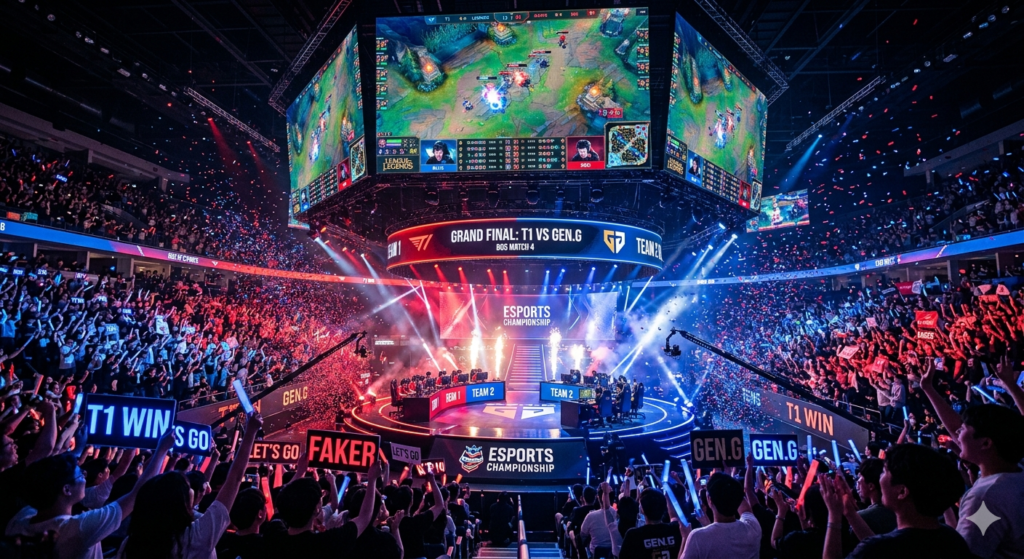
Esports has gone from a niche hobby to a multi-billion dollar global industry. Here’s the fascinating story of how competitive gaming conquered the world.
The Rise of Esports: From Basement Tournaments to Billion-Dollar Industry
I still remember watching early Counter-Strike tournaments on a pixelated stream, where the commentary sounded like it was coming through a tin can and the prize pool was measured in hundreds of dollars, not millions. The players were usually teenagers playing in their parents’ basement or a local internet café.
Twenty years later, esports organizations have venture capital funding, purpose-built arenas, official partnerships with the Olympics, and payrolls that would make professional athletes in traditional sports raise an eyebrow.
How did this happen? And perhaps more importantly — where is it all going?
The Numbers That Made Skeptics Take Notice
The turning point for mainstream recognition came when the numbers got impossible to ignore.
The League of Legends World Championship routinely draws more simultaneous viewers than the NBA Finals or the Super Bowl. The International — Dota 2’s premiere tournament — has paid out prize pools exceeding $40 million. Individual professional players earn salaries in the seven figures, plus sponsorship income.
The global esports market is currently valued at well over $3 billion annually and is projected to continue growing. Streaming platforms, media rights deals, merchandise, event tickets, in-game advertising — the revenue streams are diverse and expanding.
When Goldman Sachs started publishing research reports on esports as an investment category, the industry had officially arrived.
The Games That Built the Industry
Not all games become esports. The ones that do tend to share certain qualities: high skill ceilings (there’s always more to master), deep strategic layers (individual skill isn’t enough — teamwork and tactics matter), and spectator appeal (watching the best players is genuinely interesting even if you don’t fully understand what’s happening).
The games that have built the esports industry into what it is today:
League of Legends remains the king of esports viewership globally. Its regional league system — run directly by developer Riot Games — gave esports the structure of traditional sports leagues, including franchised teams and revenue sharing.
Counter-Strike 2 (evolved from the original CS from 2000) has one of the most dedicated and long-running competitive communities in gaming history. Its skill floor is brutal, but its ceiling is essentially unlimited.
Valorant is Riot’s tactical shooter and has grown explosively since launch, particularly in North America and Southeast Asia.
Dota 2 may have the most dedicated hardcore fanbase of any esport, and The International remains the most prestigious single tournament in the industry.
Rocket League deserves a special mention — the idea that competitive car soccer would become a major esport would have seemed absurd ten years ago. And yet here we are.
The Olympic Connection
Perhaps the most dramatic sign of legitimacy: the International Olympic Committee has formally engaged with esports. The Olympic Esports Series has been running since 2023, featuring simulated sports titles. The conversations about full medal event status at future games continue to evolve.
This is not without controversy. Debates continue about what games are “Olympic appropriate,” how drug testing applies to esports, and whether competitive gaming belongs in the same tradition as track and field.
But the conversation itself would have been unthinkable a decade ago. The legitimacy trajectory of esports has been remarkably steep.
The Player Pathway: From Bedroom to Stage
One of the most interesting aspects of esports is how democratic the entry pathway is — in theory, at least.
Traditional sports require expensive equipment, coaching, facilities, physical attributes that most people can’t change. Esports require a computer or console and an internet connection. The practice environment is the game itself. Anyone can play in ranked matchmaking against increasingly skilled opponents and improve.
This has created genuine rags-to-riches stories. Players from developing countries who started playing in internet cafes because they couldn’t afford their own PCs have become world champions. Teenagers from small towns have been scouted via their streaming channels and recruited to professional teams.
That said, the pathway is increasingly professionalized. Junior leagues, coaching academies, and esports management companies have emerged. Getting to the top of the scene still requires enormous dedication — often the equivalent of a full-time job starting from early adolescence.
What’s Next for Esports?
The industry is at an interesting inflection point. The explosive growth of the early 2020s has moderated somewhat as the initial wave of investment cooled. Some franchise leagues have faced financial difficulties. Team valuations have been tested.
But the underlying audience is still there — and still growing, particularly in markets like Southeast Asia, South America, and the Middle East.
The next phase is probably consolidation: fewer but more sustainable organizations, more developed farm systems for new talent, better player welfare standards, and more sophisticated media rights deals as streaming matures.
Esports won’t be a bubble that pops. It’s too embedded in gaming culture at this point, and gaming culture is simply too large and too young to fade. What it will do is grow up — with all the complexity and occasionally boring maturity that implies.