
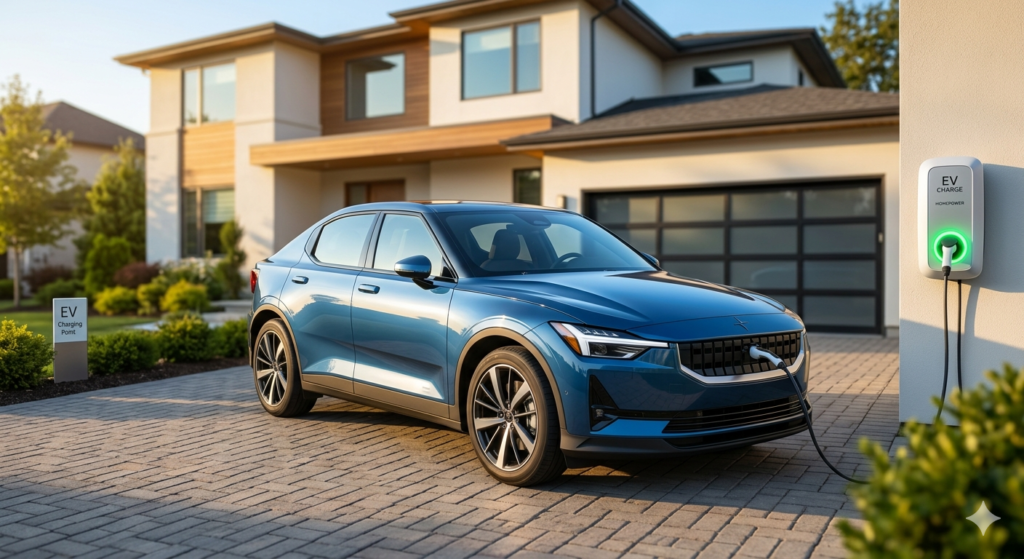
Thinking about going electric? Here’s the honest 2025 EV guide — the real advantages, the real frustrations, and whether it’s actually worth it for you.
Electric Vehicles in 2025: The Honest Pros, Cons, and Everything In Between
My neighbor got an EV two years ago and cannot stop talking about how much he loves it. My other neighbor got one about six months ago and mostly talks about how frustrating the public charging infrastructure is in our area.
Both of them are telling the truth. That’s the complicated reality of electric vehicles in 2025: the technology is genuinely excellent and the experience genuinely varies based on where you live, how you drive, and what you expected going in.
Here’s the no-spin version.
The Real Advantages (Not Just Marketing Copy)
The daily driving experience is legitimately better. I’ll say it plainly: electric powertrains are more responsive, smoother, and more enjoyable to drive than equivalent ICE (internal combustion engine) vehicles. The instant torque delivery — full acceleration power available immediately from a standstill — changes the feel of driving in a way that’s hard to describe until you’ve experienced it.
Home charging is genuinely convenient. If you have a garage or private parking, charging an EV at home is dramatically easier than going to a gas station. You plug in at night, wake up to a full charge. You essentially never need to make a dedicated “fuel stop.” For people with home charging access, this is one of the most consistent sources of satisfaction EV owners report.
Operating costs are significantly lower. Electricity is cheaper than gasoline per mile in most regions. Maintenance is simpler — no oil changes, fewer brake replacements (regenerative braking reduces brake wear substantially), fewer mechanical failure points overall. The total cost of ownership math increasingly favors EVs over multi-year ownership.
The environmental case is real, with caveats. Over a vehicle’s lifetime, EVs produce less carbon than equivalent gasoline vehicles even accounting for manufacturing and the current electricity grid. As the grid gets cleaner, this advantage grows. The lithium battery mining concerns are legitimate — but they should be weighed against the ongoing emissions of gasoline extraction and combustion, which are often not held to the same scrutiny.
The Real Frustrations (The Marketing Copy Won’t Tell You)
Public charging is inconsistent. This is the biggest source of real-world EV frustration and it’s worth being direct. Public charging networks have improved dramatically, but reliability remains variable. A significant percentage of public chargers are out of service on any given day. Fast charger wait times can be substantial on busy routes. If you’re doing significant road travel in areas without Tesla Supercharger density (which is excellent) or equivalent coverage, range anxiety remains real.
Charging speed still lags behind refueling. Even a fast DC charger takes 20-30 minutes to get most EVs from low to sufficient charge. That’s not a dealbreaker for most trips, but it’s a meaningful difference from 5-minute gas stops. Long road trips require planning and patience.
Cold weather significantly affects range. Battery performance drops in cold temperatures — typically 20-40% range reduction in very cold conditions. If you live somewhere with harsh winters, factor this into your range calculations.
Apartment and rental housing is a genuine problem. Without private home charging, the EV ownership experience is substantially worse. If you depend entirely on public charging, the convenience equation flips. This is a real equity and accessibility issue that infrastructure investment needs to address.
Who Should Buy One Right Now
An EV makes excellent sense for you if:
- You have access to home charging (garage, private parking with an outlet)
- Your daily driving is within reliable range (most modern EVs handle 200+ miles per charge)
- You have access to the charging network needed for your road trip patterns
- You’re planning to keep the vehicle for 4+ years (where total cost of ownership advantages accumulate)
An EV is probably not the right call yet if:
- You live in an apartment without charging access and depend on public infrastructure
- You regularly drive long distances in areas with sparse charging networks
- You need maximum flexibility without any range or charging planning
- You live in an area with extremely cold winters and have specific range requirements
The Brands Worth Considering in 2025
This is worth a brief overview because the EV market has changed significantly and brand reputation has shifted.
Tesla remains the benchmark for charging infrastructure and software, though quality control concerns persist for some model lines. The Supercharger network is genuinely the best in the business.
Hyundai/Kia have produced genuinely excellent EVs — the Ioniq 6 and EV6 received strong critical reception for range, charging speed, and value.
BMW and Mercedes have brought their chassis and interior quality to compelling EV options.
Rivian is impressive for trucks and SUVs if budget is less of a constraint.
Ford’s Mustang Mach-E and F-150 Lightning serve different audiences well.
Bottom Line
EVs in 2025 are genuinely good cars that deserve serious consideration. The daily driving experience is excellent, the operating costs are favorable, and the technology is mature enough to be reliable.
But the public charging infrastructure is still genuinely uneven, and the ownership experience varies significantly based on your specific situation.
Do your homework. Test drive one. Talk to owners in your specific area about their charging experience. And if the circumstances align? The switch is probably worth it.