Samsung Galaxy Ring reviewed: sleep tracking, health sensors, battery life, and the big question — can a smart ring really replace a smartwatch in 2025?
Samsung Galaxy Ring Review: Can a Smart Ring Actually Replace Your Smartwatch?
I have worn a smartwatch every day for four years. The Galaxy Ring was the first wearable in that time that made me take it off voluntarily — not because the ring made me leave the watch behind permanently, but because it made me genuinely reconsider what I actually need a wearable to do.
Smart rings are not new. Oura has been refining the category since 2015. But Samsung entering the space with the hardware quality of the Galaxy brand and the software integration of Samsung Health is a different proposition. Here is what the Galaxy Ring actually delivers.
Design and Build
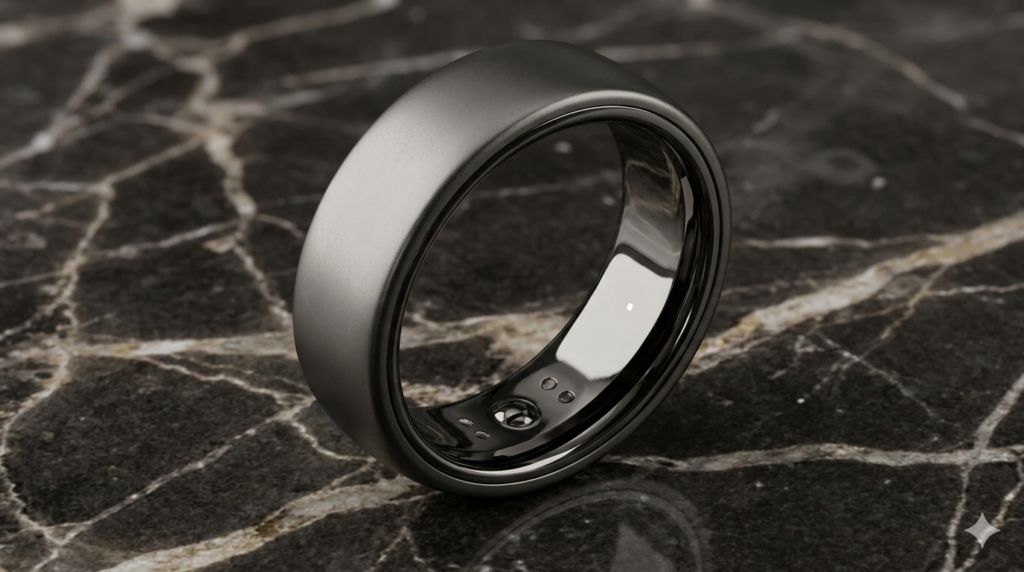
The Galaxy Ring is available in sizes 5 through 13 and three finishes: Titanium Black, Titanium Silver, and Titanium Gold. The titanium construction makes it genuinely jewelry-adjacent in quality — it does not look like a tech device. It looks like a ring that someone thought carefully about.
At 2.3 to 3 grams depending on size, it is light enough to forget you are wearing it. The inner surface, where the health sensors make contact with your finger, is smooth and flush. After two weeks of continuous wear including sleep, showering, exercise, and cooking, I have no skin irritation and no scratches on the ring.
The absence of a screen, buttons, or charging contacts on the exterior means there is nothing to accidentally activate and nothing that catches on clothing or surfaces. This sounds trivial but makes a real difference in daily comfort compared to wristbands and watches.
Health Tracking: What the Sensors Actually Measure
The Galaxy Ring contains three sensors working together: optical heart rate sensors, an accelerometer, and a temperature sensor. From these, Samsung Health derives a significant range of metrics:
- Heart rate and heart rate variability (HRV) — continuous monitoring with configurable alert thresholds
- Sleep staging — light, deep, REM and awake tracking with a sleep score each morning
- SpO2 — blood oxygen percentage, measured during sleep
- Skin temperature — deviation from your personal baseline, useful for cycle tracking and illness detection
- Activity and step counting — accuracy comparable to wristband trackers
- Energy Score — Samsung’s proprietary daily readiness metric synthesizing HRV, sleep quality, and activity recovery
The sleep tracking is where the Galaxy Ring genuinely earns its place. Worn on the finger, the optical sensors have better contact and less movement artifact than wrist-based devices. My sleep staging data from the Galaxy Ring compared favorably to a simultaneous Garmin Fenix reading, with the Ring generally producing more consistent stage durations.
Battery Life
Samsung claims seven days of battery life. In testing, I consistently achieved six to seven days of continuous wear including sleep tracking, exercise sessions, and all-day monitoring. Charging from low to full takes about 80 minutes in the included case charger.
This is the Galaxy Ring’s most practical advantage over smartwatches. Never taking off a wearable for charging — or at worst charging it once a week while showering — removes the most consistent friction point of the smartwatch experience.
The Samsung Health Integration
The Galaxy Ring requires a Samsung phone and the Samsung Health app. This is the biggest limitation — iPhone users and non-Samsung Android users are excluded entirely. The Samsung Health app has improved significantly in 2025 and the Ring’s data integrates cleanly, but the closed ecosystem approach will frustrate users who prefer platform flexibility.
The Energy Score feature, which synthesizes your readiness for the day based on overnight recovery metrics, is genuinely well-implemented and more nuanced than similar features from Fitbit and Garmin. It adjusts its expectations based on your recent history rather than applying a fixed baseline, which makes it more practically useful after a few weeks of data.
Can It Replace a Smartwatch?
For most people, no — but not for the reason you might expect. The limitation is not health tracking capability. The limitation is notifications, apps, and the ability to quickly check information without pulling out your phone. If you use your smartwatch primarily as a health tracker and wrist notification glancer, the Galaxy Ring plus a regular analog watch is a compelling combination.
For people who rarely act on smartwatch notifications anyway — who mostly look at them and then pick up their phone — the Galaxy Ring makes a strong case as the only wearable you need.
Ratings
Design and Build Quality██████████ 10/10
Sleep Tracking Accuracy█████████░ 9/10
Health Sensor Range ████████░░ 8/10
Battery Life █████████░ 9/10
Comfort for Daily Wear██████████ 10/10
Value for Price ███████░░░ 7/10
Final Verdict
The Samsung Galaxy Ring is the best smart ring available in 2025, and it makes the category feel genuinely grown up. The health tracking is excellent, the design is the best of any smart ring, and the battery life makes the wearable experience nearly frictionless.
The Samsung-only requirement is a real limitation. If you have a Samsung phone and you want the most comfortable, unobtrusive health tracking experience available, the Galaxy Ring is the recommendation. Rating: 8.8 / 10