The global chip shortage that defined 2020-2023 is over. Here’s what’s actually happening in semiconductors now and why it matters more than ever.
The Chip Shortage Is Over — But the Semiconductor Race Just Got More Intense
Remember 2021? When you couldn’t buy a graphics card for under three times its retail price, new car lots were empty because of missing chips, and even some medical device manufacturers were struggling to source components?
The acute chip shortage of 2020-2023 is largely resolved. Supply chains have normalized. You can buy a GPU for a reasonable price. Car lots have inventory.
But if you think the semiconductor story has calmed down, you’re missing what’s actually happening. The chip industry is in the middle of one of the most consequential transformations in its history.
What Caused the Shortage (Quick Version)
The perfect storm of the chip shortage was: pandemic-driven demand explosion (everyone bought laptops, monitors, and gaming gear simultaneously), factory disruptions from COVID outbreaks and natural disasters, and the brutal lead-time reality of semiconductor manufacturing — you can’t just turn on a new fab. Building a new semiconductor facility takes 3-5 years.
The shortage also exposed how concentrated chip production had become. A huge percentage of the world’s most advanced chips come from a single company (TSMC) in a single location (Taiwan). This geographic concentration became a geopolitical and national security concern practically overnight.
The New Dynamic: The Race for Cutting-Edge Fabs
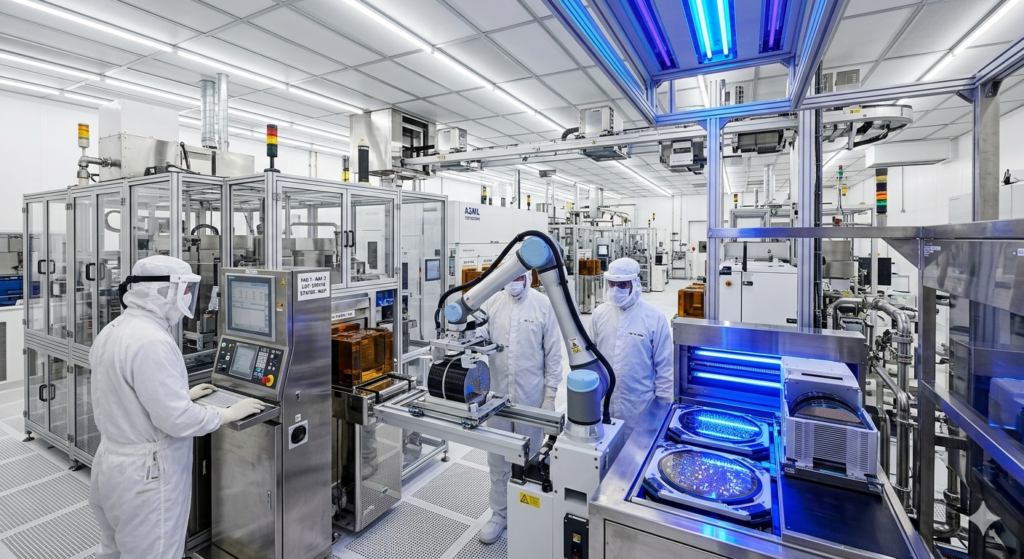
What’s happening now is a massive, government-subsidized race to build next-generation semiconductor manufacturing capacity outside Taiwan.
The CHIPS Act (USA): The US invested $53 billion to incentivize domestic chip manufacturing. TSMC is building fabs in Arizona. Samsung is building in Texas. Intel is expanding aggressively. These facilities are being fast-tracked in ways unprecedented for the industry.
European Chips Act: €43 billion in European investment targeting a doubling of Europe’s semiconductor market share by 2030.
China’s investment: Hundreds of billions in state investment aimed at achieving self-sufficiency in advanced chip manufacturing — specifically to reduce vulnerability to export restrictions.
Japan’s resurgence: Long-dormant Japanese chipmakers are reviving with government support, aiming to recapture some of the manufacturing leadership the country held decades ago.
The outcome: significant new fabrication capacity coming online over the next 3-7 years. More geographic distribution. More supply resilience.
The AI Chip Dimension
The other thing reshaping semiconductors is the AI computing explosion.
The AI boom has created essentially unlimited demand for specific types of chips — particularly NVIDIA’s H100 and subsequent GPUs designed for large-scale AI training. The waiting list for high-end AI chips at the height of ChatGPT’s growth was measured in years. Hyperscalers (Amazon, Google, Microsoft, Meta) were spending billions per quarter on AI chip procurement.
This has done several things to the semiconductor industry:
NVIDIA’s position is extraordinary. Its market cap briefly exceeded $3 trillion on AI demand. No chip company in history has captured value at this speed.
Custom silicon is exploding. Google’s TPUs, Amazon’s Trainium and Inferentia, Apple’s Neural Engine, Meta’s custom inference chips — every major tech company is now a chip designer. The economics of AI at scale make custom silicon pay for itself.
TSMC’s leverage has grown. All these custom chips need to be manufactured somewhere. Advanced node manufacturing (3nm, 2nm) is possible at exactly one company at scale. TSMC’s strategic importance has become essentially unique in modern industry.
Why This Matters Beyond Tech
The semiconductor race isn’t really a technology story. It’s a geopolitical story.
Advanced chips power modern military systems, AI development (and therefore economic competitiveness), communications infrastructure, and virtually every complex system in the modern economy. The country or bloc that controls advanced chip manufacturing has substantial leverage.
Taiwan’s position as the dominant manufacturer of the world’s most advanced chips makes it simultaneously the most economically vital island on earth and the center of a potential geopolitical flashpoint that keeps defense strategists awake at night.
The CHIPS Act, the European initiatives, and China’s investments aren’t just industrial policy. They’re strategic positioning for a world where semiconductor supply is a national security concern as fundamental as oil was in the 20th century.